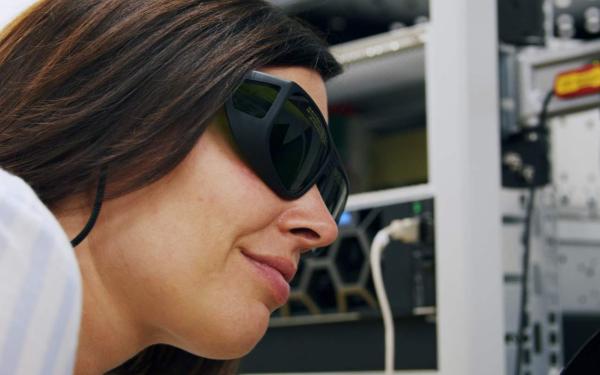
Stefanie Kroker works in the field of nanometrology, creating the tiniest structures and developing techniques to measure them as precisely as possible. Research on quantum computing could also benefit from this. A portrait.
Supporting Science in Sub-Saharan Africa: On the satisfaction derived from developing solutions
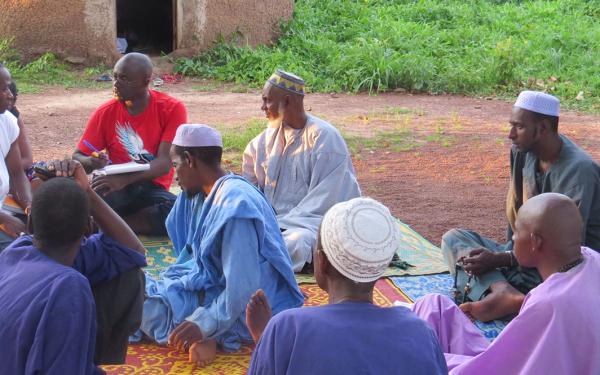
Not only crises caused by political upheavals or famines continue to wreak havoc on societies and communities on the African continent. Gilbert Fokou, a social anthropologist from Cameroon, sees himself as a bridging interface between the people and decision-makers in politics. He is driven by a strong determination to help the very poor.
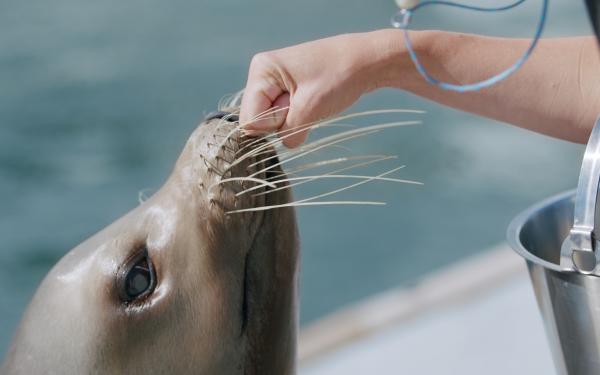
Marine mammals are fascinating creatures. Their visual system in particular, and how it contributes to underwater orientation, for example, is still a mystery. Frederike Hanke from the University of Rostock wants to change that.
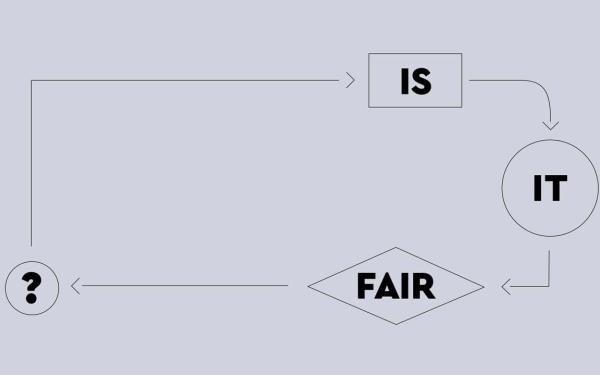
Europe is experimenting with the application of automated decision-making to manage asylum and migration processes. Researchers in an international project are investigating whether and how the use of algorithms is able to contribute to fairness.
Artificial Photosynthesis: The decisive step forward
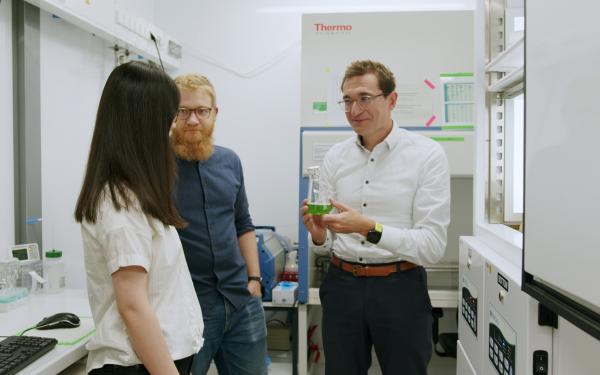
Tobias Erb of the Max Panck Institute for Terrestrial Microbiology has reinvented photosynthesis – in the laboratory. His goal is to produce chemical substances with the help of sunlight and carbon dioxide in the air.
Manganese Nodules and Microorganisms: Life Fuelled by Radioactivity?
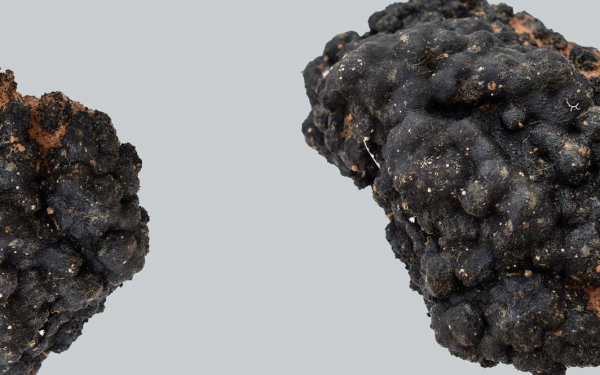
Radioactivity is generally considered harmful to life. Yet in manganese nodules in the deep sea, microorganisms might benefit from it. Or even live off it? This is the intriguing hypothesis that geoscientist Walter Geibert hopes to prove.
What happens in the brain when we are confronted with completely unknown things and situations? At TU Dresden, Christian Beste is researching what is known as the "unknown unknown". To do so, he is turning science on its head.